Using A Trading App For Smarter Crypto Decisions
A trading app can make crypto participation more convenient by bringing market prices, portfolio information and transaction tools into one digital environment. Someone planning to buy cryptocurrency may appreciate the speed of mobile access, but convenience should be combined with clear research, security awareness and realistic risk limits.
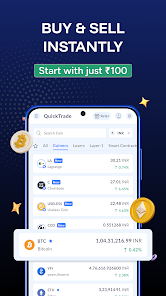
Crypto prices can move significantly in a short period, so the quality of a trading decision matters more than how quickly an order can be placed. A useful trading app should help users understand what they are buying, how much capital is involved and how the transaction affects the rest of their portfolio.
Instead of treating the app as a source of constant opportunities, users can use it as a structured tool for researching, executing and reviewing crypto activity.
The Trading App Should Fit The User
A beginner and an active trader may need very different things from the same platform.
Someone making occasional crypto purchases may prefer a straightforward interface that clearly displays prices, balances and transaction history. A more active user may place greater importance on charts, liquidity information and faster market monitoring.
The key question is not whether the app has the maximum number of features.
It is whether the available features are understandable and useful for the way the individual actually participates in crypto markets.
Before Opening A Position
A transaction should ideally begin with a reason rather than a sudden price movement.
Before buying a cryptocurrency, the user can consider a few basic questions:
- What is the purpose of buying this asset?
- Is the position short term or long term?
- How much capital can be exposed?
- How volatile has the asset been?
- What would justify selling later?
- Does the position increase portfolio concentration?
This short review can help prevent the app's convenience from turning into impulsive activity.
Market Prices Need More Than A Quick Glance
A live price tells users where an asset is trading at that moment, but it does not explain the broader market context.
A cryptocurrency may already have risen sharply before appearing attractive on the screen.
Another may have fallen significantly because of a meaningful change in sentiment or project-specific developments.
Users should look beyond the current price and understand recent movement.
Price history, volatility and broader crypto-market direction can all provide useful context before a transaction is made.
Charts Can Help Without Becoming Complicated
Trading apps often include charts that show how prices moved over different periods.
These can help users observe trend and volatility.
However, more indicators do not automatically lead to better decisions.
A beginner may benefit from understanding simple price movement before using advanced analytical tools.
The chart should answer a practical question, such as whether the asset is trending strongly, moving sideways or experiencing unusual volatility.
It should not be treated as a guarantee of what the market will do next.
Portfolio Information Matters Before The Next Trade
A trading app should make it easy to see how much crypto the user already owns.
This matters because buying a new asset can change total portfolio risk.
For example, a user may already have significant exposure to cryptocurrencies that tend to move in similar ways.
Adding another position can increase risk even if the new asset has a different name.
Portfolio decisions should therefore consider the complete allocation rather than one transaction in isolation.
Concentration Can Build Quietly
Users do not always notice when one asset becomes too large.
Suppose a cryptocurrency rises significantly while the rest of the portfolio remains relatively stable. That one holding may gradually become a dominant percentage of total crypto value.
This creates greater dependence on a single market outcome.
A useful trading app should make portfolio concentration easy to notice.
Strong performance can be positive, but it can also change the level of risk being taken.
Liquidity Can Affect The Final Price
Crypto assets differ significantly in trading activity.
A highly liquid cryptocurrency may have enough buyers and sellers to support smoother transactions.
A lower-liquidity asset can show wider spreads and greater execution differences.
This means the price displayed before a transaction may not always be the exact final price.
The larger the order or the faster the market is moving, the more important liquidity can become.
Understand Spread And Execution
The difference between available buying and selling prices affects the real cost of a trade.
A narrow spread generally makes entering and exiting more efficient.
A wider spread can create a larger gap between the price at which users buy and the price at which they could immediately sell.
Frequent traders should pay particular attention to this.
An asset may need to move favourably just to overcome transaction-related costs before producing a positive net outcome.
Costs Should Be Reviewed Before Trading Frequently
A trading app can make repeated transactions easy.
That does not make frequent trading inexpensive.
Depending on the platform and transaction type, applicable charges may affect the result.
Users should review costs before increasing activity.
The most useful performance measure is the final net result rather than the gross difference between entry and exit prices.
A strategy with many small gains can still perform poorly if costs and occasional large losses outweigh them.
A Simple Decision Framework
One way to keep crypto activity disciplined is to use the same decision framework before each trade.
Market Context
Understand whether the broader crypto market is trending, weak or highly volatile.
Asset Reason
Know why this specific cryptocurrency is being considered.
Position Size
Decide how much capital can reasonably be exposed.
Exit Logic
Know what would cause the position to be reduced or closed.
Portfolio Effect
Review how the new trade changes overall crypto exposure.
This framework does not predict market direction. It simply makes the decision process more consistent.
Security Should Be Part Of The Trading Routine
A trading app contains sensitive financial information.
Users should protect passwords, OTPs and authentication details.
Unexpected messages asking for account access should be treated carefully.
It is also important to use official app sources and verified support channels.
Security mistakes can create losses unrelated to market movement.
For that reason, account protection should be considered part of trading discipline rather than a separate technical issue.
Do Not Share Account Access For Trading Help
Some users may receive offers from individuals claiming they can generate profits by operating the account.
Giving another person control can expose personal and financial information.
Users should keep credentials private and make sure transactions remain under their own control.
Market opinions can be considered without sharing login information.
Account access and investment advice should always remain separate.
Avoid Chasing Sudden Rallies
A rapidly rising cryptocurrency can create urgency.
The user may feel that waiting means missing the opportunity.
However, buying after a sharp move can result in entering at an extended price.
The better approach is to review whether the asset still fits the original strategy.
If the only reason for buying is that the price is rising quickly, the decision may be driven more by fear of missing out than analysis.
A Falling Price Is Not Automatically A Buying Signal
The opposite mistake can happen during declines.
A user may assume that an asset must be attractive because it is now much cheaper than before.
A lower price does not guarantee recovery.
The decline may reflect changing market conditions, lower liquidity or an asset-specific issue.
Before buying into weakness, users should understand what changed and whether the original investment case remains valid.
Keep Essential Money Away From Crypto Trading
Trading capital should generally be separate from money required for immediate financial needs.
Crypto markets can decline sharply.
If essential cash is invested, users may be forced to sell at an unfavourable time.
Money needed for emergencies, household expenses or debt repayments should ideally remain outside speculative activity.
This gives users more flexibility to manage market volatility without financial pressure.
Smaller Transactions Can Help Beginners Learn
A new user may understand the interface better by beginning cautiously.
Smaller transactions can provide experience with order confirmation, portfolio updates and transaction records while limiting the financial impact of operational mistakes.
The purpose is not to eliminate risk.
It is to learn how the platform behaves before committing larger amounts.
Familiarity can make future activity easier to manage.
Notifications Should Support A Plan
Price alerts can be useful when users want to monitor specific market levels.
However, every notification should not become an automatic trade.
A sharp movement alert may simply indicate that the market requires further review.
Users can pause, understand why the price is moving and then decide whether any action fits the original strategy.
Notifications should bring attention to the market, not control the decision.
Transaction History Can Reveal Behaviour
A trading app's historical records can become a useful learning tool.
Users can review whether they tend to buy after rallies, sell during panic or make too many transactions during volatile periods.
These patterns may not be obvious while trading live.
Regular review can reveal whether activity is based on a consistent strategy or repeated emotional decisions.
Good records make this analysis easier.
The App Cannot Remove Crypto Risk
Even a reliable trading app cannot guarantee a successful investment.
Crypto assets can lose value because of market sentiment, liquidity changes, regulatory developments or project-specific problems.
The app provides access and execution.
The financial outcome still depends on what is bought, when it is bought, how much capital is used and when the position is exited.
Users should therefore evaluate platform quality and market risk separately.
When Staying Out Can Be The Better Choice
Crypto markets are continuously available, but users do not need to participate continuously.
There may be periods when prices are extremely volatile or market direction is unclear.
Choosing not to trade can be a valid decision.
A trading app should be viewed as a tool available when the strategy requires it, not as something that needs constant use.
Patience can be just as important as execution.
Conclusion
A trading app can simplify crypto research, transaction execution and portfolio monitoring, but it works best when users follow a clear process. Market context, position size, liquidity, costs and security should all be considered before placing a transaction.
Users should avoid chasing rapid price moves, keep essential savings outside crypto activity and review their overall portfolio before increasing exposure. The app can make the process faster, but disciplined decisions remain the user's responsibility.
For users who prefer a dedicated trade bitcoin app experience, the same principles remain important: understand the asset, verify every transaction, protect account access and use only capital that fits within personal risk limits.